
Close


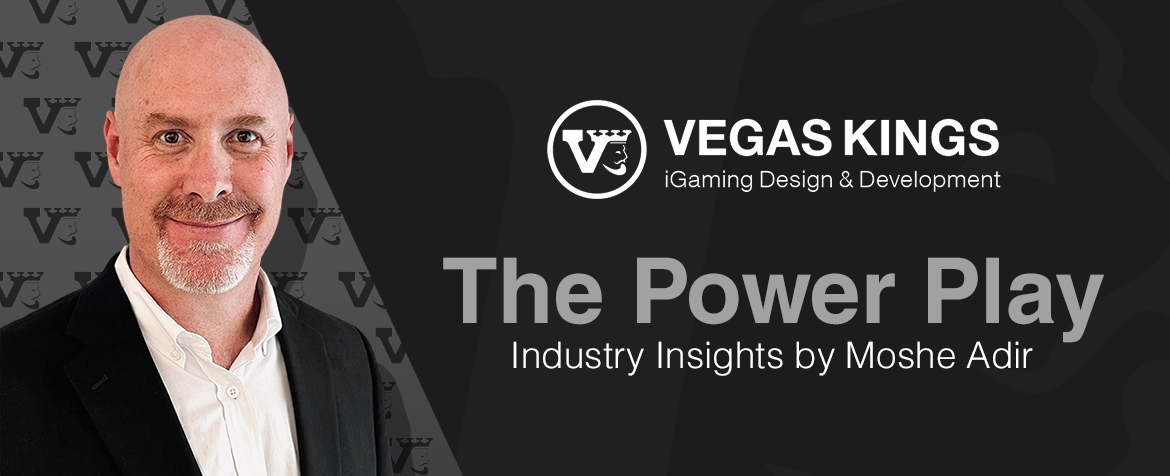

For 27 years, I hid what I did for a living.
When people asked about my work, I’d mumble something about “web development” and quickly change the subject. The idea of publicly writing about the iGaming industry was absolutely terrifying.
Then in early 2025, my Marketing Director, Catie Di Stefano, wouldn’t let me off the hook anymore. She’d been pushing me to share my stories publicly. “Moshe, you’ve been in this industry since the beginning,” she’d say. “People need to hear these stories before they’re lost.”
I was 54 years old, running one of the world’s oldest iGaming agencies – and I’d never written a single public article.
Now, almost a year later, I’ve published dozens of articles, been asked to write for industry publications, appeared on multiple podcasts and I’m launching my own interview series.
More importantly, this journey has made me healthier, sharper and more engaged with life and the gambling industry than I’ve been in years.
Let me tell you how it happened and why ignoring the LinkedIn “formula” worked better than following it.
When Hiding Became Harder Than Sharing
The shift didn’t happen overnight. It was an accumulation of moments.
I watched younger competitors with 5 years of experience position themselves as “experts” while I stayed silent with 30 years of actual stories. I realized that Vegas Kings’ legacy was locked in my head, invisible to potential clients who had no idea we’d been there from day one. I saw AI-generated content flooding LinkedIn – generic, soulless articles that all said the same thing.
But what really tipped me over the edge was… when I realized I was running out of time to tell these stories.
I’m 55 now. The early pioneers of iGaming are getting older. Some have unfortunately already passed away.
The institutional memory of how this industry was built is disappearing. If I didn’t document my experiences now, they’d be lost forever.
Catie saw what I couldn’t: that my reluctance to share my early experience was actually doing a disservice to the industry and our potential clients. Her persistence finally got me to take that first step.
Why I Love LinkedIn
Here’s something I didn’t expect: LinkedIn has become my absolute favorite platform.
It’s the first app I open multiple times a day. Not because I’m chasing engagement metrics or worrying about the algorithm, but because I genuinely learn something new about my industry every single time I open it.
The LinkedIn community grows my knowledge. The platform connects me with amazing new people. It sparks conversations that matter.
Facebook used to be my go-to platform. Now, Facebook feels like a dinosaur I occasionally visit to say happy birthday to friends or, oddly enough, to watch clips of Everyone Loves Raymond – mostly comedy stuff.
But LinkedIn? LinkedIn has become the belle of the ball for me. I really appreciate what it’s created.
But when I first started posting, well-meaning people (note from Catie: not me lol) told me there was a “LinkedIn formula” for success. Post daily, even if you have nothing meaningful to say. Use carousel posts with colorful slides and numbered frameworks. Create polls to boost engagement metrics. Follow the algorithm – post at optimal times, use specific hashtags, engage within the first hour.
I tried some of this. It felt completely inauthentic.
So I made a decision: I was going to ignore all of it and do what felt natural to me.
I’m not here to pump up my ego or selflessly push my brand. I’m here to offer value and have real conversations with people who care about the same iGaming industry I’ve dedicated my life to.
My Approach
I post when I have something worth saying. Sometimes that’s once a week. Sometimes it’s three times in one week. I’m not going to create content for the sake of feeding the algorithm. That’s how you end up with meaningless “engagement bait.”
I write articles, not carousels. Sure, slide shows might get more “engagement.” But what kind of engagement? People clicking through five slides of generic advice they’ll forget in ten minutes?
I’d rather write 2,000 words that someone actually remembers and references months later. But that’s just me.
I don’t create polls about obvious things. “Which is more important: player retention or acquisition?” Come on. These aren’t conversations, they’re ego metrics.
I focus on substance over schedule. The LinkedIn algorithm might reward daily posting, but my clients reward depth, authenticity, and demonstrable expertise.
Slower Growth, Better Quality
My LinkedIn following didn’t explode overnight. I didn’t “go viral” with clever hacks.
But what I built was something more valuable: a community of people who actually read what I write.
What’s interesting is that I get so much feedback on my articles, but not in the comments section.
Instead, people message me directly via WhatsApp, and that’s where some of the most meaningful conversations happen. When I’m at conferences, people come up to me and bring up an article or a moment that sparked their interest and we engage deeply over it.
These moments don’t get seeded into the LinkedIn algorithm either. They’re invisible to the engagement metrics. But they’re far more valuable than any viral post.
My engagement rate is probably terrible by “growth hacker” standards. But my conversion rate from reader to consulting inquiry, speaking opportunity, or meaningful professional relationship is probably 100x better than someone who posts daily motivational quotes with stock photos.
I’d rather have 1,000 followers who genuinely care about industry history and authentic storytelling than 50,000 who just click “like” while scrolling.
The Method: How I Actually Write
People constantly ask me: “How do you write so much? Where do the stories come from?”
Here’s my honest process.
Every article begins with a specific moment I lived through. Not “the industry evolved in the 2000s” but “I remember standing in a Toronto hotel lobby in May 2000, watching body-painted models hold leashes attached to two full-grown tigers.” That’s the difference between content and storytelling. Content reports facts. Storytelling transports you to a moment.
I don’t start by writing. I start by talking – just out loud to myself. I’ll walk circles around my home office, rambling into my left AirPod microphone. I pace, I gesture even though no one’s watching, I go off on tangents, I remember additional details.
Then I transcribe it all. This captures my natural voice before I start trying to “sound professional.” The physical movement of walking somehow unlocks memories and connections that sitting at a desk never does.
Sometimes I’ll run article ideas past Catie before I start – “Does this sound interesting?” or “Is this the right angle?” – but the actual talking through and writing is solitary work.
Here’s where it gets weird: once I have my theme, I open my email app and just start writing.
Not a Word document. Not a notes app. My email.
I don’t know why it works, but something about that blank email field makes me feel less pressure. It’s not a “proper document” yet, so I give myself permission to just dump everything.
I write everything I can think of that relates to my article theme. No paragraphs. No order. No worrying about whether it’s good. Just a pure stream of consciousness.
“Remember when we had to mail CDs… that night in Toronto with the tigers… the affiliate who showed up in worn sneakers then bought a Ferrari six months later… my dad putting that chip on number 7… how I felt when partners pulled out of Crown Jewel…”
This is where it all comes together. All the fragments, all the memories, all the emotions – just flowing out without judgment.
Then I start pulling out the gems. I read through the mess and highlight the moments that give me that feeling – “yes, that’s the story.” I start arranging them in order.
Some pieces naturally connect. Others I realize don’t belong in this article but might become their own article later. Then I flesh it out. Add context for readers who weren’t there. Connect the dots between moments. Make sure the emotional arc makes sense.
This is where Catie comes in. After I’ve got a draft, she reviews spelling, grammar, and formatting – I’m terrible at commas. She makes sure I’m not being too humble, because I have a tendency to downplay achievements. She ensures the article actually leads somewhere valuable, not just nostalgic rambling. She checks that we’re not accidentally sharing confidential client information. And she pushes me to add more emotional context when I’m being too factual.
She’ll often say things like “This section feels rushed – what else happened?” or “You mention being nervous but don’t explain why.” Those questions help me dig deeper.
She also has to approve the header image – which has become its own challenge. I ran out of relevant photos from my archives in the early articles. Now I use my likeness in Nano Banana AI to create custom images with my face in them. It’s a bit surreal seeing AI-generated versions of myself, but it solves the visual problem while keeping the content personal.
The articles that get the most response are the ones where I admit uncertainty, fear or mistakes. Not the ones where I position myself as having all the answers. When I wrote about my moral wrestling match with gambling addiction – watching a close friend struggle while I build casino platforms – that article generated more meaningful conversations than anything else I’ve published.
Vulnerability isn’t a writing technique. It’s a commitment to honesty.
The Joy I Never Expected
Here’s what surprised me most: I really enjoy writing.
Something I never realized I would appreciate so much. For years, I thought of myself as an innovator, a designer, a business builder, a problem solver – but not a writer.
Turns out I was wrong. There’s something deeply satisfying about taking messy memories and shaping them into coherent stories. About finding the right words to capture a feeling. About connecting with people through shared experiences.
The email app mind dump has become one of my favorite parts of the week. It’s meditative, almost therapeutic. I’m not “creating content” – I’m processing my own journey, understanding it better by articulating it.
How Writing Made Me Healthier
Unexpectedly, this writing journey has made me physically healthier.
I realized that to write well, I needed to think clearly. To think clearly, I needed to take care of my body. So I started going to the sauna every morning at the gym. This became my thinking time, where I’d mentally outline articles while sweating. I go to the gym and lift lots of weights. I focus on the cleanest diet possible. I started paying attention to sleep – can’t write compelling stories when you’re exhausted. I take walks to process ideas – movement unlocks creativity in ways sitting at a desk never can.
Writing didn’t just change my professional brand. It changed how I approach my entire life. When you’re creating content regularly, you become more observant. You notice details. You remember conversations differently because you’re thinking, “This might be a story.”
Why my approach has shown momentum
I see so much generic LinkedIn content that feels like it was churned out by a content factory – barely personalized, completely forgettable. Here’s why I think my approach works better.
Specificity beats generality. Instead of “Online gambling evolved rapidly in the 2000s,” I write “In 2000, we literally mailed CD-ROMs to players’ houses because dial-up internet couldn’t handle casino software downloads.” Which one makes you want to keep reading?
Vulnerability beats authority. I could position myself as an unquestioned expert. But I’d rather share my doubts, my moral wrestling matches, my mistakes. That’s what creates connection.
Stories beat statistics. Data is important. But data without story is boring. I lead with story, support with data when needed.
Experience beats research. Anyone can Google “history of online gambling” and write a generic article. Only people who were actually there can tell you what it felt like to watch the industry transform.
My voice, not a template. I don’t follow content templates or frameworks. I write the way I talk. Sometimes that means long, winding paragraphs. Sometimes it means sentence fragments. Sometimes it means starting with a confession that makes me uncomfortable. That’s what makes it authentic. You’re getting me, not a polished corporate version of me.
What This Journey Has Generated
Let’s be honest about why I do this: yes, I love writing and sharing stories. But this is also business development.
Since starting this journey, I’ve been asked to contribute to industry publications that previously I’d never have approached. They found me through my LinkedIn articles.
Industry podcasts started reaching out, wanting to hear these stories in conversation format. I’ve gotten inbound consulting inquiries from operators who specifically mention reading my articles and wanting “someone who was actually there.”
Speaking opportunities at conferences where organizers cite specific articles as why they want me. Reconnections with old industry friends who reached out after reading something that reminded them of shared experiences.
And our team at Vegas Kings feels proud to work for a company whose founder publicly shares our legacy. I can now talk about industry topics beyond just “hire us” – I’ve built a personal brand that’s separate from but complementary to Vegas Kings.
And now I’m launching my own podcast series to capture these industry stories in conversation format before they’re lost forever.
The Ripple Effect of Visibility
What started as Catie pushing me to write one LinkedIn article has cascaded into regular article publication, multiple podcast guest appearances, launching my own interview series, publication opportunities, speaking invitations, and consulting inquiries from people who specifically want “someone who was there.”
But more than the business outcomes, it’s given me renewed purpose in my career’s second harvest.
I’m not just running Vegas Kings anymore. I’m documenting an industry. I’m connecting generations of gaming professionals. I’m preserving stories that matter.
And it all started because I finally stopped hiding and started sharing.
The Unexpected Gift
Here’s what I didn’t expect: the act of writing has given me clarity about my own career.
When you’re forced to articulate 30 years of experience, you see patterns you missed while living through them. You understand why certain decisions mattered. You appreciate relationships you took for granted.
Writing isn’t just business development. It’s personal archaeology.
I’m excavating my own history, understanding my journey in new ways, and preserving stories that would otherwise disappear. Every word is mine. Every memory is real. Every vulnerability is genuine.
And every time someone messages me on WhatsApp after reading an article, or approaches me at a conference to discuss a moment that resonated with them, I’m reminded why this matters. These conversations don’t show up in LinkedIn’s engagement metrics, but they’re the whole point.
For Anyone Thinking About Starting
If you’re sitting on years of experience but haven’t started sharing publicly, here’s what I’d tell you.
Start with one story. Don’t try to write the definitive history of your industry. Pick one specific moment and tell that story well.
Don’t wait for perfect. My first articles were rough. I’ve gotten better through repetition, not through waiting until I was “ready.”
Write like you talk. Don’t try to sound like a “thought leader.” Sound like yourself having a conversation with someone you respect.
Find your editor. Everyone needs someone who will tell them when something doesn’t make sense or when they’re burying the lead. For me, that’s Catie – pushing me to be clearer, braver, more specific.
Accept that some people won’t care. Not every article will land. Some will get minimal response. That’s okay. The ones that do connect will be worth it.
Be willing to be vulnerable. The articles where I shared doubts and struggles have been more valuable for my brand than the ones where I just showcased expertise.
Ignore the formula. Post when you have something worth saying. Focus on substance, not schedule. Build a community that actually reads, not just scrolls.
What’s Your Story?
You don’t need 30 years in an industry to have valuable stories. You just need to be willing to share them authentically.
And you don’t need fancy tools or writing software. I literally write in my email app, dumping thoughts without judgment, then shape them into something coherent.
Look at what happened when I finally took that first step: one article led to more articles, which led to podcast appearances, which led to launching my own podcast.
None of this was planned. It emerged organically because authentic storytelling creates opportunities you can’t predict.
The question isn’t “Am I interesting enough?” The question is “What story am I keeping to myself that someone needs to hear?”
What’s stopping you from opening a blank email and just starting to write?
“The Power Play by Moshe Adir” is released weekly on the Vegas Kings website and LinkedIn. Drawing from nearly 30 years of experience in design and development for online gaming, Moshe shares exclusive industry insights, lessons learned, and behind-the-scenes stories from the evolution of iGaming. Stay tuned for fresh perspectives from one of the industry’s OG!