
Close



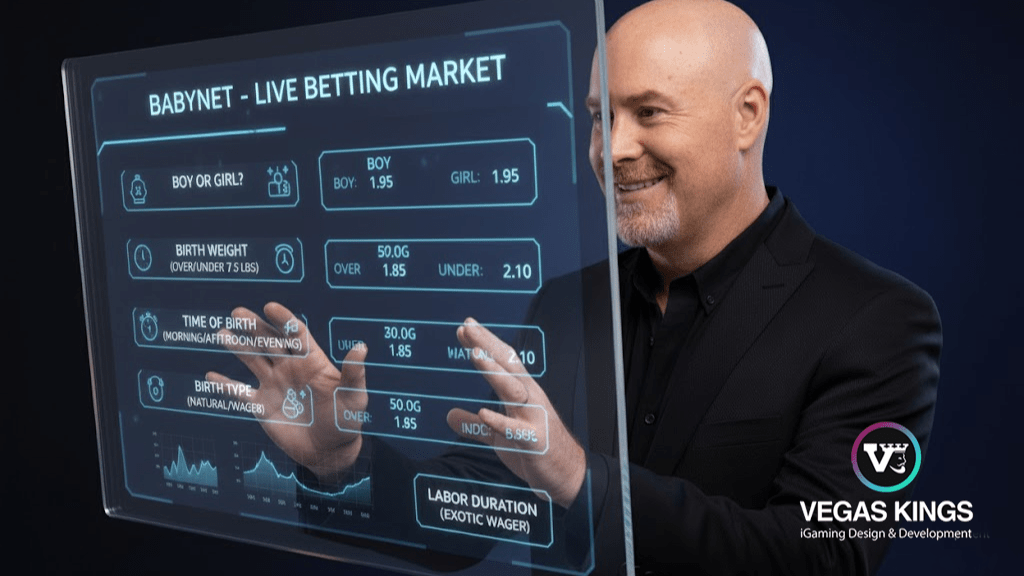
Looking back 26 years later, I can’t believe we didn’t turn it into a betting market.
Boy or girl? Even money. Birth weight over/under? 7.5 pounds. Time of birth? Morning, afternoon, or evening odds. Natural birth vs. water birth? Prop bet. Duration of labor? Exotic wager.
We had over 4 million people watching live. They were glued to their screens for 8 hours. They were invested in the outcome.
And we never once thought to let them put money on it.
But this was 1999, and online gambling was still the Wild West of dial-up and CD-ROMs. One mention of betting and we would have been blacklisted by every parent on the internet. Our traffic was massive – we could have been the biggest online gaming affiliate if affiliates had even existed yet.
Instead, we just made history by streaming the world’s first live birth on the internet.
CNN covered it. We broke South African internet bandwidth. And I got my first taste of what it meant to build something valuable enough that someone else wanted to buy it.
This is the story of Babynet – my first viral moment, my first exit, and the experience that shaped everything I’ve built in iGaming since.
How It Started: Two Guys Looking for the Next Big Thing
In the late 1990s, my online casino design business was finding its feet, but slowly. There weren’t many casinos to design for yet, and getting normal corporate web design work was brutal because hardly anyone had modems or email.
Enter Larry Gershowitz – a doctor, but more importantly, an entrepreneurial thinker who saw the big picture in the online space. We met and immediately clicked. We’d spend late nights discussing concepts and ideas, looking for opportunities in this wide-open digital frontier.
One night, we noticed massive traffic going to a new US site called BabyCenter. “We could create our own version,” we thought. Larry would curate the medical content, his wife Ashli would handle content generation, and I’d build the site.
So that’s what we did. BabyNet was born – a comprehensive guide for expectant parents through all the different trimesters.
As a single young male, pregnancy content was farfrom my wheelhouse.
But I learned everything I needed to know while building the site and pasting in all the content Larry and Ashli were creating. Our business model was simple, advertising sales and sponsorships. We were finding our feet, learning as we went.
The Audacious Moment: Let’s Stream a Birth
Somewhere along the way, we had an insane idea: what if we filmed the first live birth on the internet?
This wasn’t about shock value. It was about authenticity. About showing expectant parents what actually happens. About creating a moment that mattered.
We started exploring live streaming technology – which in 1999 was barely functional.
The company we approached for the tech had a dynamic guy named Elvis working there. When we pitched the idea, he said, “My wife Christia is about to have a baby. Let me ask her.”
She said yes.
I can’t remember all the details of what we offered – I think we managed to get her a year’s worth of baby nappies sponsored, plus some other things like Baby lotion. But Christia and Elvis were in. We had our couple.
Now we just had to figure out how to make it technically possible.
The Technical Nightmare
Here’s what we were trying to do: stream live video in 1999 over dial-up internet connections that maxed out at 56k if you were lucky.
To give you context – this was before YouTube, before broadband, before anyone had proven that live streaming video was even viable at scale.
We were literally inventing this as we went.
The streaming company we worked with had innovative technology for the time, but to make it work on dial-up, we had to remove frames from the video.
The result was small, low-resolution footage that looked like it was constantly buffering. We fiddled with frame rates to create the illusion of smooth streaming when really we were just showing you every third or fourth frame.
We used old Sony handheld cameras. The setup was basic. The quality was terrible.
And yet we did it!
The 8-Hour Water Birth That Broke the Internet
The birth lasted 8 hours.
Christia started on the hospital bed, but eventually got up and moved to a water birth setup. We followed her with the camera the entire time. It was exhausting. It was raw. It was real.
At some point, we had Red Bull as a sponsor. I distinctly remember placing a Red Bull can on Christia’s belly to get it into the frame during the broadcast. Looking back, it was so raw and unpolished – but that was the beauty of it.
The baby, a healthy boy, was born after those 8 grueling hours.
And the numbers? We had over 4 million live streams.
To put that in perspective: we broke South African internet bandwidth. The traffic was so massive that it impacted the entire country’s internet infrastructure. People weren’t just watching alone, they were huddled around monitors in groups at offices, universities, internet cafes. We had no real way to measure how many actual people witnessed this birth.
CNN Calls
CNN picked up the story through online chatter and noticeboards. They called Larry for quotes and covered it, though I don’t think they rebroadcast any of the actual birth footage.
But their awareness sent our traffic into overdrive. Suddenly we weren’t just a South African startup doing something weird with streaming technology. We were making global news.
That was the moment I learned: being first matters more than being perfect.
Our video quality was garbage. The experience was clunky. It buffered constantly. But none of that mattered because the moment was authentic and unprecedented.
The First Exit
After Babynet’s viral success, we started getting acquisition interest.
Naspers, who owns Tencent and is one of the largest media companies in the world, approached us first. But we weren’t aligned on vision or terms. Eventually, we ended up selling Babynet to IOL (Independent Online), a major South African media publisher.
This was my first exit, and I learned so much from the deal, mostly by making mistakes.
The sale happened in two stages in the early 2000s. Looking back, we probably sold way too early and for way too little. I had no idea how to navigate acquisition negotiations. I didn’t understand how to value what we’d built. I didn’t have experienced advisors guiding me, but Larry and I figured it out.
But the experience was everything.
IOL ingested the Babynet brand into their core media platform. They redesigned it, modernized it, and took it to the next level. Working with such a large media agency gave me insight into how bigger companies operate – processes, structures, scale that I’d never been exposed to.
That exit money wasn’t life-changing, but it funded my deeper push into iGaming. Without Babynet, there might not have been a Stonewall or Vegas Kings.
The Betting Market That Never Was
Here’s the part that haunts me from an iGaming perspective: we had the perfect conditions for a prediction market and never built it.
Imagine if we’d created betting pools around:
We had over 4 million people watching live. Many of them for hours. They were already invested in the outcome emotionally, adding a small financial stake would have amplified engagement exponentially.
Of course, this was 1999. Online gambling was absolute taboo. Affiliates didn’t exist. Payment processing was a nightmare. Regulatory frameworks were non-existent.
But in an alternate universe where we’d built that betting layer? Babynet might have been worth 10x what we sold it for.
What This Taught Me About iGaming
The Babynet experience helped shape my philosophy about building engaging digital experiences, lessons that directly informed 27 years at Vegas Kings.
Lesson 1: Authenticity beats production quality.
Our video was terrible, low resolution, choppy frame rates, constant buffering. But people watched for 8 hours because it was real. They weren’t watching for entertainment, they were watching because something meaningful was happening.
This applies directly to live casino streaming today. Players don’t need 4K perfection. They need to trust that what they’re seeing is authentic. A slightly grainy live dealer stream that feels genuine will always outperform a polished but sterile experience.
Lesson 2: Live moments create unbreakable engagement.
People watched Christia’s labor for 8 hours through terrible video quality. Why? Because they were invested in the outcome. They’d committed time, and they wanted to see it through.
This is the same psychology that drives live sports betting. Once someone places a bet on a live game, their attention is locked. The moment matters more than the medium.
Lesson 3: Technical limitations don’t kill engagement if the core value is strong.
We had every technical disadvantage: dial-up internet, primitive streaming technology, no infrastructure for this kind of scale. None of it mattered because the core proposition – witnessing something unprecedented, was compelling enough.
Early online casinos were slow, clunky, and ugly compared to land-based experiences. But players still came because the convenience and novelty outweighed the technical limitations. We learned to optimize the experience within constraints rather than waiting for perfect technology.
Lesson 4: Being first creates lasting authority.
We’re still talking about Babynet 26 years later. That first-mover advantage, combined with genuine innovation, created a story that outlasted the actual business.
In iGaming, this principle is everything. Be first in a market, own the narrative, and even if competitors eventually have better technology or bigger budgets, you’ll always be “the original.”
Lesson 5: Sponsorship integration must feel native.
That Red Bull can on Christia’s belly? It was clumsy, but it taught me early that brand integration has to feel contextual. You can’t just slap logos everywhere and call it marketing.
In iGaming, this means sponsorships need to enhance the player experience, not interrupt it. Jersey patches on live dealer uniforms work. Intrusive mid-game banner ads don’t.
Why This Still Matters in 2025
The iGaming industry is obsessed with technology – better graphics, faster load times, more sophisticated algorithms. All of that matters.
But Babynet taught me something more fundamental: the best technology in the world can’t compensate for a weak core experience.
Today’s operators have 8K streaming, AI-powered personalization, and instant payment rails. Yet many still struggle with engagement and retention because they’ve forgotten the basics:
We streamed a live birth on technology that barely worked, broke the internet, made global news, and got acquired – all because we understood that the experience mattered more than the technology.
That’s still true today.
The Aftermath
Larry, Ashli and I are still very close friends. We love getting together and reminiscing about those crazy days when we thought streaming a birth was a reasonable business idea.
Larry stayed in medicine but never lost his entrepreneurial edge. And I took everything I learned from Babynet into Vegas Kings – where for 27 years, we’ve been building digital experiences that prioritize engagement, authenticity, and real human connection.
Every time I watch a live casino stream, I think about Christia in that hospital room with a Red Bull can on her belly, giving birth while over 4 million people watched through choppy, low-res video.
We didn’t build the betting market. But we built something more valuable: proof that authentic moments, delivered through imperfect technology, could create engagement that no amount of polish could manufacture.
That lesson has been worth more than any exit.
“The Power Play by Moshe Adir” is released weekly on the Vegas Kings website and LinkedIn. Drawing from nearly 30 years of experience in design and development for online gaming, Moshe shares exclusive industry insights, lessons learned, and behind-the-scenes stories from the evolution of iGaming. Stay tuned for fresh perspectives from one of the industry’s OG!